ENDURANCE EATS
Your go-to safe space to learn about all things nutrition and endurance performance.
Race Day Nerves: How to Handle Pre-Race Anxiety, With Sports Psychologist Dr. Erin Ayala
November 4, 2026
listen on YouTube
listen on spotify
listen on apple podcasts
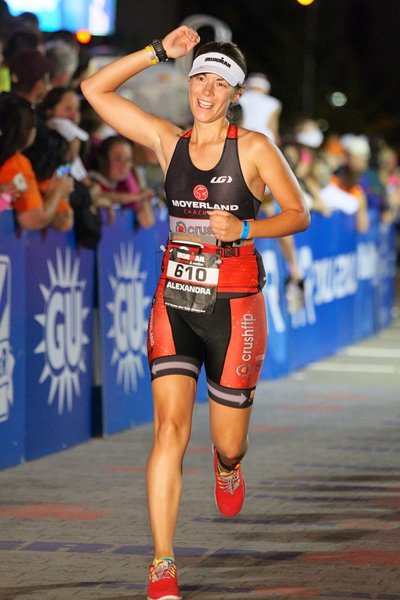



The morning of my first real race in almost a decade, I woke up nauseous. Back in my triathlon days, I raced six or seven times a year, and my nerves felt like excitement and adrenaline. This was a whole other ball game.
The thought of solid food made me want to gag. My husband looked at me and asked if I was okay because I looked pale, and I told him I was kind of a wreck inside.
I was expecting it, though. The day before, I’d mixed up a bottle of super high-carb Scratch and stuck it in the fridge because I knew the Pop-Tart I’d packed wasn’t going to happen. That bottle was the only way I got carbs in that morning. It wasn’t ideal, but I needed something.
When I asked my Instagram followers what they wanted to ask sports psychologist Dr. Erin Ayala on the Endurance Eats Podcast, the main theme was nerves and anxiety. Erin had so many good tools that I wanted them all in one place.
Erin is a licensed sports psychologist and certified mental performance consultant in Minneapolis and the founder of Skadi Sports Psychology. She also has several Unbound 200, marathon, 70.3, and Ironman finishes, and I’ve seen her Strava. She’s a beast on the bike.

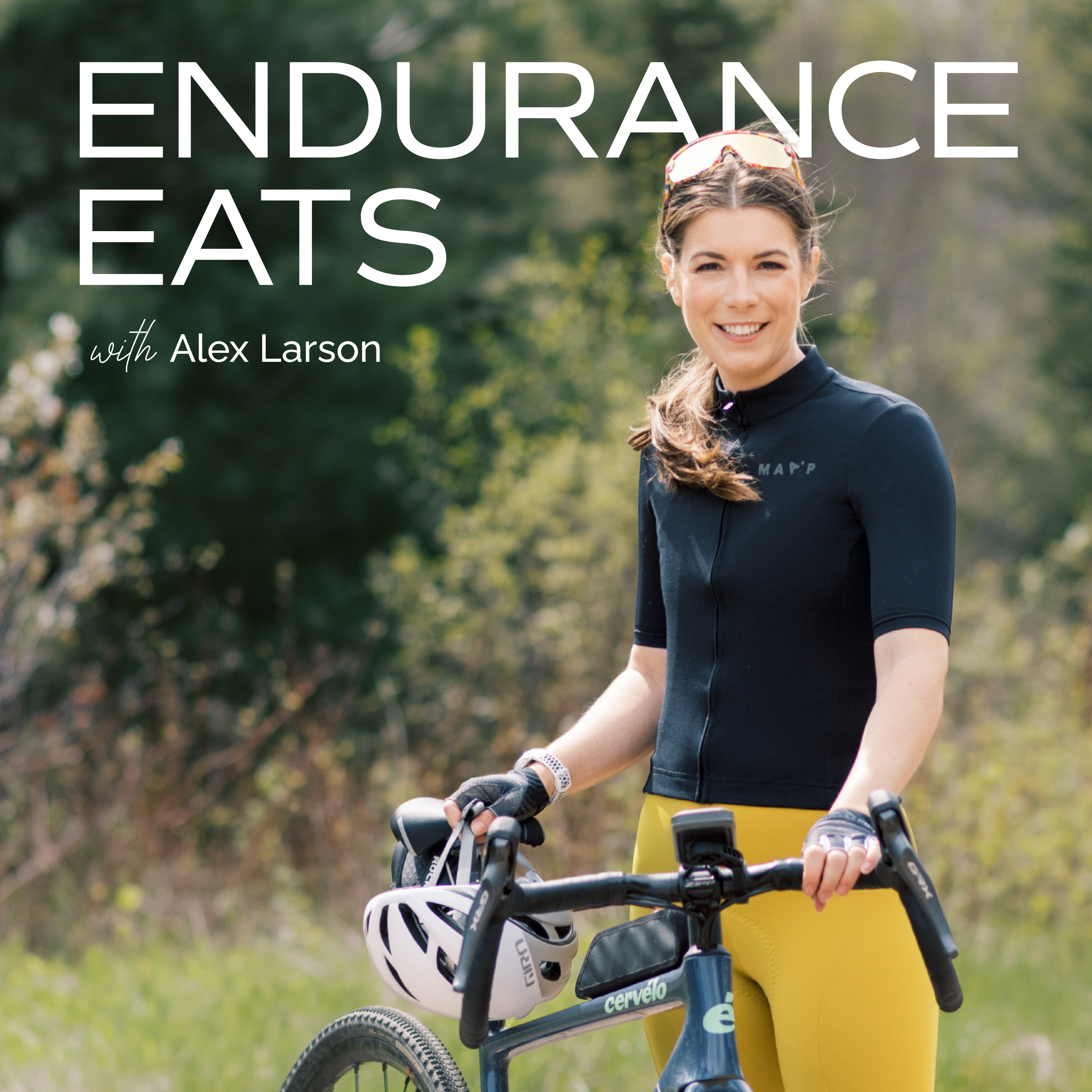
Welcome to the Endurance Eats podcast! This is your go-to safe space to learn about all things nutrition and endurance performance. Get ready for a journey packed with science-backed strategies, practical tips, and inspiring guests to revolutionize the way you think about fueling your body. Whether you’re a seasoned triathlete, a newbie runner, or a veteran cyclist, this podcast is for you.
In this engaging conversation, Alex Larson and Dr. Erin Ayala explore the multifaceted world of endurance sports, focusing on the mental and psychological aspects that influence performance. They discuss personal connections, training insights, managing expectations, and the importance of deliberate practice. The conversation delves into the challenges of anxiety, body image, and aging, while also emphasizing the significance of defining personal success and building resilience. With practical strategies and relatable anecdotes, this dialogue serves as a valuable resource for athletes seeking to enhance their mental performance and overall well-being.
00:00 Introduction and Personal Connections
02:51 Training Progress and Expectations
05:48 Understanding Plateaus in Performance
08:42 Deliberate Practice and Goal Setting
11:39 Defining Success and Personal Goals
14:36 Managing Race Day Nerves and Anxiety
18:38 Understanding Anxiety and Its Impact
21:14 Managing Anxiety Through Characterization
23:25 The Role of Nutrition in Anxiety Management
24:38 Coping with Anxiety During Races
27:30 Navigating the Low Points in Endurance Events
31:00 Building Mental Toughness and Resilience
32:37 Strategies for Different Race Distances
35:47 Building Confidence for Big Goals
38:55 Navigating Post-Event Transition
41:05 Redefining Athletic Identity
42:03 Aging and Athletic Performance
44:35 Body Image in Endurance Sports
50:07 Recommended Reads for Athletes
51:38 Connecting with Erin Ayala
Guest Bio:
Dr. Erin Ayala (she/her) is the owner and founder of Skadi Sport Psychology, a mission-driven applied sport psychology practice based in Minneapolis, Minnesota, that serves athletes across the U.S. and Canada. As a Licensed Psychologist and Certified Mental Performance Consultant (CMPC) with over a decade of experience in sport psychology, Dr. Ayala blends clinical expertise with athletic insight to deliver evidence-based support tailored to endurance athletes—including LGBTQ+ individuals, women, non-binary athletes, and those navigating life transitions like injury recovery or retirement .
In her practice, she develops dynamic, interactive sessions that draw on health psychology, positive psychology, and mindfulness-based therapies. She helps clients reframe challenging thoughts, clarify values, set meaningful goals, and foster self-compassion while championing rest, quality sleep, and joy in sport.
Beyond therapy, Dr. Ayala supports the broader sport psychology community by offering CMPC mentorship working with clinicians to meet certification requirements through personalized mentorship and tailored resources. She’s also an accomplished endurance athlete herself boasting multiple national podium finishes in gravel, fat-bike, ultra-endurance, and virtual racing .
Dr. Ayala’s academic contributions include over 20 peer-reviewed articles and book chapters, and her work has been featured in Trail Runner, Bicycling Magazine, and The New York Times .
Resources Mentioned in This Episode:
- Apply for 1:1 Coaching with an ALN Dietitian
- Books include: The Confidence Gap by Russ Harris, Meditation for Mortals by Oliver Burkeman, and The Champion’s Mind: How Great Athletes Think, Train and Thrive by Jim Afremow
- Erin’s Contact
◦Instagram https://www.instagram.com/skadisportpsychology
◦Website https://www.skadisportpsychology.com/
Connect with Me:
- Instagram: @alexlarsonnutrition
- Website: alexlarsonnutrition.com
Don’t Forget to Subscribe!
Click that follow button to stay updated on future episodes packed with actionable insights and expert advice for endurance athletes.
Have Questions or Suggestions?
Send me a message, and I might cover it in a future episode!
This episode is brought to you by Skratch Labs— real-food, performance-driven nutrition that’s easy on your gut and powerful in its effectiveness. Check them out for mixes, chews, bars, and more that help you train harder and recover smarter.
Use code ENDURANCEEATS20 for 20% off!
Race Day Nerves Are Normal (and You Don’t Have to Get Rid of Them)
Erin’s first point: anxiety is normal, and we don’t have to try to get rid of it. Nobody wants it, but it shows up because we care.
Her approach to pre-race anxiety comes down to three ideas:
- Anxiety is normal. Feeling it doesn’t mean something is wrong with you.
- Avoidance makes it worse. Skipping the hard thing feels good today and costs you next time.
- You can plan for it. If you know it’s coming, you can decide in advance how you’ll respond.
The avoidance trap
All humans like to avoid difficult thoughts and feelings if we can help it. Race morning brings plenty your body might avoid: a turning stomach, feeling like you might throw up, cold and hot flashes, sweating, or lightheadedness.
So the natural tendency is to avoid the thing making you anxious, which is the race. We tell ourselves I’m not ready. I’m not fit enough. I’m not healthy enough. We skip it and feel relief in the short term.
The next time, we get even more anxious. Every time we avoid, Erin says, we make the anxiety worse, because we’re playing the short game instead of the long game. One of the best treatments for anxiety is exposure, so the first thing we have to do is choose to keep showing up. (Health and safety are always the exception.)
That one hit me, because on race morning I was in full flight mode and wanted to stay in bed all day.
The second spiral: “I’m not supposed to feel this way”
Once we show up, a new problem starts. Your stomach is turning, you’ve been to the bathroom 10 million times and the last thing you want is the hearty bowl of oatmeal you planned for.
So we start thinking I’m not supposed to feel this way. Why am I freaking out? This never happens. Then we freak out about how we feel, which creates another spiral and makes us even more anxious. Erin’s fix is learning to take anxiety along for the ride, quite literally.
How to take your anxiety along for the ride
Erin has a comparison for any parent of an elementary school kid. They come home with a lot to share: what they had for lunch, the color of someone’s shoelaces, the bug they found. We love them and care about them, but we aren’t always interested in every story. Say “That’s interesting, thanks for sharing” and let it go.
We can treat our own anxious thoughts the same way instead of getting hooked by them. A few of Erin’s favorite ways to do that:
- Turn the voice into a character and name it. “Gertrude has a lot to say today.” Or “Wow, someone has a lot of commentary. Thank you so much for your opinion.”
- Give your anxiety the nod. Picture two high school guys passing each other in the hallway and nodding. Oh hey, nice to see you at the start line. Then go back to your pre-race routine, even if that means checking your tire pressure for the 10th time.
- Get a little sarcastic. “Well, everything’s going according to plan. I guess I care about this race today. So what are my options?”
Erin describes anxiety as that overly helpful friend who isn’t helping, like getting tire-changing advice from someone who doesn’t know you’ve been riding for years. Anxiety has good intentions with not-so-great delivery.
When Erin has thoughts that aren’t helpful mid-race, she pictures taking that thought and putting it on a shelf to come back to later. She doesn’t have time for it right now, so we’re going to keep going. Whatever version works for you, Erin’s reminder is that it takes practice.
What to Eat on Race Morning When Nerves Kill Your Appetite
If you tend to get anxious before races, Erin encourages a liquid breakfast, and it comes back to matching your expectations with reality.
If you expect a big bowl of oatmeal with fruit (high carb, low fat) and the texture and density of oatmeal feels awful that morning, that disconnect adds to the stress. Expect a smoothie, juice, or high-carb drink mix instead, and you start from something you can get down. That’s exactly why I had that Scratch waiting in the fridge.
Here’s how to build a nervous-stomach race morning:
- Plan a liquid breakfast first. A smoothie, juice, or high-carb mix gets fuel in when solid food won’t.
- Practice it before race day. Erin sees a lot of athletes wait until race day to try nutrition and mental skills, expecting them to work, so treat your long sessions as rehearsal.
- Add solids slowly. Once the liquid breakfast works, get creative with foods like applesauce and build in more solid food over time.
The hardest part is not freaking out when your stomach turns. Erin explained that the more we catastrophize, the worse our symptoms get. She sees it in injury recovery and even concussion recovery, where fear avoidance and constant symptom-checking can prolong recovery. Stressing about the stress fires up your sympathetic nervous system, so roll with the punches.
Getting Through the “Dark and Stormy Miles”
Nerves don’t stop at the start line. In a 50-mile gravel race a while back, the first 15 miles were rollers and climbing, and I dropped my chain at mile 8. That was totally my error, not a mechanical.
I got it fixed quickly, but mentally I had to pep talk myself back into the race. This is so hard. This is miserable. I hate this. Why don’t I just be done? What I usually tell myself is “Just a little bit longer, Alex.”
The last 10 to 15 miles turned out to be the best of the whole race. For the last three, we were flying in a little group, and I was drafting behind a guy at 27 miles an hour without even pedaling. I wanted to shout to the group, “Does anyone else feel like this is the greatest moment of their life right now?”
Erin calls those low points the dark and stormy miles. It might be mechanical, GI distress, or the notorious pain cave, where you’re overwhelmingly tired and want to be done, but you’re only two-thirds of the way through.
Visualize success, and make it realistic
Lots of people say to visualize success. Erin agrees, as long as the success is realistic. Stuff happens in every type of race, so we can’t expect to feel like a superhero the entire time.
She calls signing up for a race a kind of informed consent. When you register, you’re signing yourself up for more highs and more lows because you care. In the low moments, give yourself permission to feel them and know you signed up for this part too.
Name the story
Your brain tends to tell the same stories in hard moments: This sucks. Why am I doing this? I should just quit. Maybe you start studying the map for a way to cut the course.
Erin’s tip is to name those stories ahead of time, so you recognize them when they show up:
- “This is the part of the race where I start to question whether I want to finish.”
- “This is the part of the event where I think about shortcuts.”
- “This is the part of the race where I want to sell my bike because I’m sick of it.”
There’s nothing wrong with planning for something that’s probably going to happen. Erin also shared something Rebecca Rusch said that came from one of her mentors: in an ultra, no matter how good or bad you feel, it’s going to change. The awful feeling won’t last, and when you feel like a superhero early in the race, check yourself, because that won’t last either.
I’ve noticed I’m so much more mentally tough now than I was a decade ago, before kids. When I’m staring up a big hill, I think, I’ve birthed three kids and breastfed them. I can suffer another minute. Back in the day, I would have dropped a gear and slowed down.
When you keep wanting to quit: make an if-then plan
To be clear, there’s nothing wrong with a DNF. Erin has had her fair share, and anyone who signs up for ultras knows they happen.
If you’re stuck in a pattern of dropping out, Erin uses if-then plans, also called implementation intentions (which work for nutrition too). If X happens, then I’ll do Y. For a student-athlete running the 1600 who keeps pulling off the track without even thinking about it, Erin helps them learn their warning signs and set process goals to cope with them.
In practice, it looks like this:
- Know your warning signs. Starting at the very front rather than near the front, or pulling rather than drafting, might set you up for trouble later.
- Spot the thought in training. Look for the workouts you can complete but where you think about stopping, and notice how you deal with it.
- Practice in a low-stakes race. Using the strategy is the goal. Finishing and your time don’t matter for this one.
Erin’s version for those of us who’ve given birth: “If this happens and I want to quit, I’m going to remind myself of the pain I’ve been through and that I can do hard things.” (I’m not recommending childbirth as mental toughness training, but it counts.)
Short Races vs. Ultras: Two Different Mental Games
I asked Erin if the tactics change between a two- or three-hour race and something like Unbound 200 or an Ironman, and she said 100%.
She works with athletes in coastal rowing beach sprints, a three-minute effort that starts with sprinting across the beach to your boat, then rowing around buoys in open ocean waves. It’s zero to 100.
For short, intense efforts, overthinking gets in the way. Give yourself specific instructions about stroke rate, and you stop relying on muscle memory, and everything gets awkward. Anyone who’s done a triathlon swim knows the harder you try, the worse it gets. Smooth is fast.
So for shorter races, the mental skills look like this:
- Trust your muscle memory
- Use arousal regulation to bring yourself down, so you’re not too revved up
- Skip the heart rate data, because it won’t help you in the moment
In a 15- or 20-hour race, you’re in a slow-burn pain cave with a lot of time in your head, and you often have to bring your arousal up. Erin noticed she tends to chill out in the middle third of a long race, with her heart rate around 120, even though it could be higher. For races like Unbound, she sets a heart rate ceiling of about 162 (climbing included) for the early miles when she feels like a superhero, and a floor of 120 so she knows when she can work harder.
Expectations, Plateaus and the Power of Small Wins
Erin and I started our conversation talking FTP. When we recorded, mine was 193, up from 152 in October. My long-term goal is 250, which would put me around 3.8 watts per kilo. Those first six months gave me some nice instant gratification, and now I’m starting to plateau.
Erin’s first FTP test was around 2015 or 2016, at 145 watts and 75 kilograms. At peak fitness, she’s now around 280-285, and that took about 10 years of consistent training. Patience, persistence, and showing up got her there (as long as you’re not overtraining or training through injury).
Her line on plateaus has stuck with me: “The bigger the gap between reality and expectations, the more psychological distress or frustration we’re going to have.”
Plateaus are normal, and Erin suggests getting curious when you hit one. My running buddy, who’s the child psychologist at our school, always says “I’m curious why that was,” and the same question works here:
- Is it nutrition?
- Is it sleep?
- Is there some unintentional self-sabotage keeping my body from recovering?
Erin also sees plateaus in many teen girls, especially among runners and swimmers going through puberty. Their bodies change, they start chasing times, and the “lighter is faster” mentality kicks in. They underfuel, which can delay puberty or disrupt endocrine health. They get slower and maybe injured, and the cycle begins.
My own expectations problem
Coming back to endurance sports, I’ve struggled with expectations myself. In my triathlon days, I had a limiting belief that I was a mediocre athlete, and I think it held me back. Now I want to challenge myself without setting the bar so high that I end up disappointed.
Erin said a lot of endurance athletes land in that same spot. We’re often type A with high standards, so we don’t want to shortchange ourselves, and we also don’t want to fail when we get to define what failure looks like.
The sweet spot is deliberate practice
Erin pointed me to the research on deliberate practice. Psychologist K. Anders Ericsson studied the practice habits of violin students to predict which ones would go pro, and his work planted the seeds for the 10,000-hour rule that Malcolm Gladwell popularized. That rule got oversimplified, because those hours were spent in a specific kind of practice.
Deliberate practice has three ingredients:
- Focus. You’re present on the task at hand, not on the trainer in erg mode watching Love Is Blind.
- A little edge. You push your skills just past comfortable, where there’s a chance of mistakes. With carbs, that might mean a bit of bloating or nausea while your gut adapts.
- Feedback. It can come from yourself, your data, or your coach on what went well and what’s worth improving.
That cycle of little wins is how we improve without setting ourselves up for failure, and it’s how I approach nutrition with our athletes. Most people want to revamp everything overnight with an all-or-nothing mindset, and it doesn’t stick. Small changes over time feel doable, and by the time we get you where you need to be, you can maintain it.
Yes, You Count as an Athlete
A lot of people tell themselves they’re not a “real” or “serious” athlete. Erin is firmly in the Stacy Sims camp: if you’re exercising on purpose, you’re an athlete. Or as Allen Lim says, if you’re sweating on purpose, you’re an athlete.
In Erin’s view, everyday athletes are arguably the best fit for a dietitian, a psychologist, or a PT, because they’re the ones juggling a million things and need extra support.
Define what success looks like for you
Erin loves asking athletes, “What does success look like for you on race day?” What does it look like this season?
It might be finishing a 5K. You might be coming back from being sick for a long time or grieving a loss in the family. We all build stories comparing ourselves to who we used to be, people our age or people on Strava, but success for each of us looks different.
Erin isn’t a parent; she has a supportive and patient spouse, and she’s prioritizing her career and business right now, so success for her looked totally different 10 years ago. Once you know what success means for you, you can reverse engineer it with small milestones and process goals, and that progress creates its own momentum.
It also helps to have someone outside your own head. I ask Hanna and Mary on my team about my own nutrition all the time, because it’s hard to coach yourself. Telling an athlete “I’ve worked with hundreds of athletes, and this is the most common problem I see” is so validating for them. As Erin said, a lot of athletes worry something is wrong with them, when what they’re going through is normal and expected.
How to build confidence for a big goal
One listener asked how to build confidence when big goals feel scary. Erin starts with the why: if you meet this goal, what’s going to be different?
Someone who wants to finish an Ironman to be a role model for their kids will set different goals than someone who wants to qualify for Kona. Once you know what’s fueling you, you can set smaller goals that build confidence along the way. A few more of her tips:
- Notice your progress. We’re hard on ourselves and compare where we are to where we think we should be, so we miss how far we’ve come.
- Find your people. That could be a care team (dietitian, psychologist, PT, coach) or friends who can ground you and talk you off the ledge.
- Be realistic about experience. Of course you’re not progressing like a veteran when you just learned how to clip in.
I’d add a realistic timeline. When athletes come to me with body composition goals, I tell them it’s going to take a while to do it in the healthiest way possible. We live in a world of instant gratification, and this is a process.
The Post-Race Blues Are Real
Reaching a big goal comes with its own hangover. The Ironman blues are super common, and Erin sees them in Olympic and Paralympic athletes who train on four-year cycles. (If you haven’t watched the HBO Max documentary Michael Phelps helped put out, it’s excellent.)
After months or even years of structuring your life around a training plan, the rug gets pulled out from under you, even if the race went well. Humans like routine, and your body needs rest.
Erin’s advice:
- Don’t roll right into the next block. Feeling fit isn’t a reason to skip recovery, and that’s how burnout and injury happen.
- Wait before registering for the next big thing. That’s often when we chase the next fix.
- Expect to feel off. Feeling lost, restless, and kind of blah is normal and expected, and it won’t last.
You are more than your sport
People tie their identity to their sport. You won’t ever find me wearing a sweatshirt that says “mom.” I love being a mom, but it’s one piece of my life, and I don’t want it to define everything, and my kids know that too.
Erin says you’re also more than your performance and your training plan. Getting 50% of your workouts in this week or missing a PR doesn’t make you a bad athlete, and you get to define what a good athlete is.
When she asks athletes what they want to be known for, it’s rarely about speed. It’s giving back to the community, inspiring the next generation, being kind or gritty or persistent. Erin registers for races to give herself boundaries around work, so for her, consistency is success. For me, it’s about doing something for myself and not for everyone else in my life, and it feels so great.
Slowing Down With Age
One listener asked how to handle slowing down with age when you come from a very competitive mindset. Erin sees this a lot, especially in women going through perimenopause. Many say they have to work harder to gain muscle and can’t get away with what they used to.
Five hours of sleep might have worked in college, but in our 40s and 50s our bodies need more recovery time. One of Erin’s mentors says it doesn’t have to be a good thing or a bad thing. It’s just a thing.
Her advice is to skip the comparison trap, because everyone ages differently, and keep playing the long game. Where do you want to be in a decade, and how can you set yourself up for that now? It’s probably consistency over intensity, plus getting clear on why you’re doing this.
I’ve had to mourn the loss of my 25-year-old metabolism. I’ve had three kids, and I’m in my late thirties, so I can’t eat as I did in my twenties. I started eating much more intentionally about a year and a half ago, and I’ve never felt better in my training. Shocker. Holy smokes, it makes a difference when you live it yourself.
For Erin, it’s sleep. She performs better and is a better therapist on a full night’s rest. Going back to the basics, even when they’re kind of boring, might surprise you.

Body Image and Endurance Sports
Erin works with plenty of male and female athletes who struggle with body image. She often starts by asking, “If you had your ideal body composition, what are you hoping to get out of it?”
Leaner isn’t always faster, especially if you want to play the long game. Chasing body composition takes up a lot of space in your brain around how you feel, recover, and train. She asks athletes whether they have the capacity for that and whether hitting the goal would change how they race at all.
Erin shared her own experience. On Zwift Power, rider weights were publicly posted, and for a while, the highest and lowest numbers in each race were highlighted in bold red. At 75 kilograms, she was often singled out as the heaviest in the peloton, and the messages we absorb made it feel lousy.
She catches herself saying “I’m not a climber,” and then asks, ” Says who? She’s been dropped on substantial hills in P1/2 crits and technical road races, and she also throws down on the flats and descents.
“Anyone can be an athlete regardless of what your body looks like.”
One of her clients said, “I don’t look like a runner.” Erin’s answer: go outside and run, and you look like a runner. If you have a body and you’re running, check, done.
Erin used to race in the Athena category in triathlon, and people would tell her she didn’t look like an Athena. Her response: “What am I supposed to look like? Enlighten me.” She wants athletes to keep showing up unapologetically, because when other people see you out there, they see themselves doing it too. (She also just registered for a sprint triathlon after years without swimming, and she promises it’ll be hilarious.)
Even pros with the “ideal” runner or cycling body struggle with body image as much as anyone else, and I wish more athletes talked about it so fewer people would feel alone.
Erin’s Book Recommendations
Erin is a huge book nerd with her own little library, and these were her top picks:
- The Confidence Gap (affiliate link) by Russ Harris. Not sport-specific, and usually the first one she recommends for anyone working on confidence.
- Meditations for Mortals (affiliate link) by Oliver Burkeman. For anyone caught up in hustle culture who struggles to rest. It’s 28 short readings over four weeks, about four pages each.
- The Champion’s Mind (affiliate link) by Jim Afremow. Her pick for a sports psych book, which she called an athlete training bible of sorts.
Work With Erin
You can find Erin at skadisportspsychology.com and on Instagram at @skadisportspsychology, where her team posts daily. Skadi is the Norse goddess of ice, snow, and mountains, often shown with skis or snowshoes and a bow and arrow. She’s a nod to the female snow-sport athletes Erin works with and to being fiercely independent and stubborn, which Erin says is also her. (Minnesotans in a nutshell.)
You don’t have to live in Minnesota to work with her. Mental performance coaching is open to athletes anywhere, and her team offers therapy in select states, so check the site for current availability.
I’m hoping that the more I get out there and race, the more those nerves settle. If race morning wrecks your stomach too, listen to the full episode with Erin on the Endurance Eats Podcast.

Alex
I provide nutrition coaching for endurance athletes to improve performance and body composition through a simple and flexible eating style.
Hi, I'm
LEARN MORE →
Top Episodes
Race Day Nerves: How to Handle Pre-Race Anxiety, With Sports Psychologist Dr. Erin Ayala
Race Day Nerves: How to Handle Pre-Race Anxiety, With Sports Psychologist Dr. Erin Ayala
Race Day Nerves: How to Handle Pre-Race Anxiety, With Sports Psychologist Dr. Erin Ayala
Race Day Nerves: How to Handle Pre-Race Anxiety, With Sports Psychologist Dr. Erin Ayala
Race Day Nerves: How to Handle Pre-Race Anxiety, With Sports Psychologist Dr. Erin Ayala


