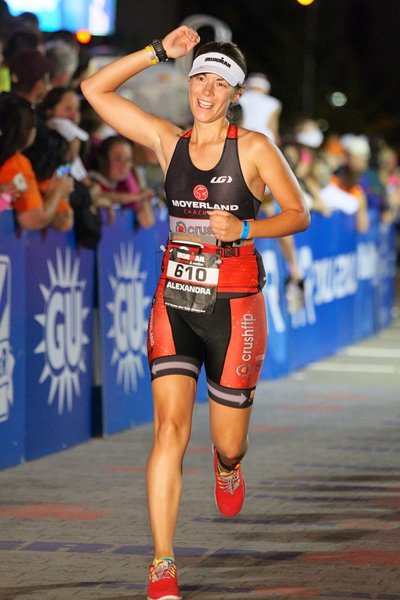



By Alex Larson, MS, RD, LD | Last updated October 29, 2026
Energy gels are one of the easiest ways to get carbs in while you run, ride or race. They’re small, quick to digest, and easy to carry. The hard part is choosing one. There are more gels on the market than ever, and they range from 19 to 50 g of carbs, from almost no sodium to 245 mg, and from about $1.75 to over $5 a gel.
My dietitian team and I taste-test fuel all the time, and we help our athletes build race-day fueling plans around the gels that work for them. Here’s our 2026 review of the most popular energy gels for running and triathlon, with the numbers side by side for comparison.
Our top picks for 2026
- Alex’s current favorite: Neversecond C30
- Best budget gel: Honey Stinger Organic Energy Gel
- Most carbs per dollar: Carbs Fuel 50 g
- Best high-carb gels (40 g+): Maurten Gel 160, SIS Beta Fuel, Styrkr GEL50, Amacx Turbo
- Best for salty sweaters: Neversecond C30, Amacx Turbo, Huma Chia Plus
- Best real-food gels: Huma Chia, UnTapped Maple, Näak Ultra
- Best for cold weather: UnTapped Maple
Energy gel comparison chart
| Gel | Carbs | Sodium | Caffeine option | Carb source | Price per gel |
|---|---|---|---|---|---|
| Maurten Gel 100 | 25 g | ~34 mg | 100 mg (Caf 100) | Glucose, fructose | $4.00 ($4.80 Caf) |
| Maurten Gel 160 | 40 g | ~32 mg | None | Glucose, fructose | $5.50 |
| Neversecond C30 | 30 g | 200 mg | 75 mg (C30+) | Maltodextrin, fructose | $3.50 |
| SIS Beta Fuel | 40 g | Low (200 mg in + Electrolyte) | None | Maltodextrin, fructose | $3.99 |
| SIS GO Isotonic | 22 g | 4 mg (100 mg in + Electrolyte) | 75 mg (GO + Caffeine) | Maltodextrin | $2.33 |
| Precision Fuel PF 30 | 30 g | 0 mg | 100 mg | Maltodextrin, fructose | $3.12 ($4.16 caffeine) |
| Huma Chia | 24 g | 105 mg | 25 mg or 100 mg | Cane sugar, brown rice syrup, fruit | $2.50 |
| Huma Chia Plus | 24 g | 245 mg | 25 mg | Cane sugar, brown rice syrup, fruit | $2.75 |
| UnTapped Maple | 26 g | 5 mg | 27 mg (Coffee) | Maple syrup | $2.49 |
| Honey Stinger Organic | 23 to 25 g | 50 to 60 mg | 32 to 70 mg | Tapioca syrup, honey | $1.75 |
| GU Energy Gel | 21 to 23 g | 60 to 125 mg | 20 to 40 mg | Maltodextrin, fructose | $2.20 |
| GU Roctane | 19 to 21 g | 125 to 180 mg | 35 to 70 mg | Maltodextrin, fructose | $3.25 |
| PowerBar PowerGel | 26 g | 210 mg | 50 mg (Green Apple) | Maltodextrin, fructose | $2.99 |
| UCAN Edge | 19 to 20 g | 45 to 50 mg (200 mg in + Electrolytes) | Yes | Corn starch | $3.25 |
| Carbs Fuel 50 g | 50 g | 105 mg | None | Maltodextrin, sucrose, fructose | $2.00 |
| Styrkr GEL50 | 50 g | Low | None | Maltodextrin, fructose | $3.75 |
| Amacx Turbo Gel | 40 g | 200 mg | 100 mg (Cassis) | Maltodextrin, fructose | $3.99 |
| Enervit C2:1PRO | 40 g | Up to 200 mg (Lemon) | 100 mg (Cola) | Maltodextrin, fructose | $3.50 |
| Näak Ultra Energy Gel | 27 g | ~185 mg | 35 mg (Chocolate) | Maple syrup, plus some fat and protein | $4.00 |
Nutrition from brand labels and prices from The Feed single servings unless noted, checked October 29, 2026. Prices change often, so check before you buy.
How we chose these gels
We looked at each gel the way we would for one of our athletes:
- Carbs per gel and how many you’d need per hour
- Type of carbs. Gels that mix glucose (or maltodextrin) with fructose let you absorb more carbs per hour.
- Sodium, since most gels have very little
- Caffeine options and how much
- Texture, flavor and ingredients, including artificial sweeteners and whole-food options
- Price and availability, including whether it’s served on course at major races
Then our team taste-tested them and shared real feedback from our own training and from the athletes we coach.
How to choose the best running gel for you

Start with carbs. Most standard gels have 20 to 30 g of carbs. Higher-carb gels have 40 to 50 g, which means fewer gels to carry and open. If you’re aiming for 60 to 90 g of carbs an hour, a 40 g gel can cut your gel count in half.
Look for glucose plus fructose. Your gut absorbs glucose and fructose through different transporters. Using both lets you take in more carbs per hour with less GI distress than glucose alone (Jeukendrup, GSSI). Look for maltodextrin or glucose plus fructose on the label, often in a 2:1 or 1:0.8 ratio.
Check the sodium. Most gels have under 100 mg, while many athletes lose 500 to 1,000+ mg of sodium an hour in sweat. A higher-sodium gel helps, but most athletes still need a hydration mix or salt tabs. Our hydration mix guide compares sodium across 20+ mixes.
Be smart with caffeine. Low doses of caffeine, about 2 to 3 mg per kg of body weight, have been shown to improve endurance performance (Guest 2021). Caffeinated gels range from 20 to 150 mg, so check the label and test them in training. Too much can upset your stomach.
Pick a texture you’ll actually take. The best gel is the one you can get down at mile 20. Thin gels go down easier when you’re breathing hard. Thick gels can be easier to handle without water.
Train with what’s on course. IRONMAN races and the Boston, Chicago, and New York City marathons serve Maurten gels on course. Check your race’s athlete guide and practice with those gels if you plan to use them.
Dietitian Note: Take your gel with water, not a sports drink. A gel plus sports drink at the same time is a very concentrated sugar load, and that’s a common cause of stomach issues on race day.
How many gels per hour do you need?
Your carb needs depend on how long you’re out there (Thomas 2016; Jeukendrup 2014):
| Session length | Carbs per hour | Standard gels (25 g) | High-carb gels (40 g) |
|---|---|---|---|
| Under 60 to 75 minutes | Not needed, or a small amount | 0 to 1 | 0 |
| 1 to 2.5 hours | 30 to 60 g | 1 to 2 | 1 to 1.5 |
| Over 2.5 hours | 60 to 90 g | 2.5 to 3.5 | 1.5 to 2 |
Start within the first 20 to 30 minutes and take something every 20 to 30 minutes. If you’re also drinking a carb drink mix, count those carbs too.
If gels have upset your stomach before, your gut can be trained to handle more carbs (Jeukendrup 2017). My Gut Check masterclass walks you through how.
Sports dietitians’ review: the best energy gels for running and triathlon
Maurten Gel 100 and Gel 160

Maurten gels are hugely popular, and athletes tend to either love them or hate them. The texture is the big divider: it’s a thick, jelly-like hydrogel. Maurten is the gel served on course at IRONMAN races and major marathons like Boston, Chicago and New York City, so it’s worth testing in training if you’re racing one.
They use a glucose-fructose blend. Maurten says the hydrogel means you don’t need water with it. It’s still sweet; many athletes still want a sip of water to clear their mouths.
Sodium is very low, so you’ll need to get electrolytes from elsewhere. The Caf 100 version has 100 mg of caffeine, which is a lot for some guts, so test it well. Maurten is also one of the pricier gels.
Nutrition per gel:
- Gel 100: 100 calories, 25 g carbs, about 34 mg sodium
- Gel 100 Caf 100: same, plus 100 mg caffeine
- Gel 160: 160 calories, 40 g carbs, about 32 mg sodium (no caffeinated version)
Carb source: Glucose and fructose
Price: Gel 100 $4.00, Gel 100 Caf 100 $4.80, Gel 160 $5.50
Our dietitians say:
“I’ve only tried the non-caffeinated version, and it took me 3 or 4 trail runs to get used to the texture. Once I did, I didn’t mind it. It sat well in my stomach, and I agree with other athletes that the mild flavor is a bit like marshmallows.”
Alex
“A go-to for many athletes. The hydrogel does seem to cause minimal GI trouble. The downsides are the price and the gelatin texture, which throws people for a loop and takes practice to get used to.”
Mary
“I love that the gel is thick enough that I don’t feel like I’ll choke on it. Some athletes hate it, but I find it easier to tolerate. I also like the mild flavor.”
Hanna
Neversecond C30

One of my favorite gels right now. Neversecond C30 has a great nutrition profile with 30 g of carbs and 200 mg of sodium, one of the highest sodium amounts of any standard gel. The texture is thin and almost watery, so it goes down easily when you’re working hard. Flavors include a new Watermelon. The C30+ (Espresso and Cola) adds 75 mg of caffeine.
It’s harder to find at some retailers now, so buy it directly from Neversecond.
Nutrition per gel: 120 calories, 30 g carbs, 200 mg sodium (C30+ adds 75 mg caffeine)
Carb source: Maltodextrin and fructose (2:1)
Price: $42 for 12 (about $3.50 per gel)
Our dietitians say:
“My athlete husband has used these gels for a year and it’s all he uses. He loves them! The flavors aren’t overly sweet or bland, just enough flavor to give you a brain boost. The consistency is almost watery.”
Hanna
“It’s one of my new favorite gels in my sports fuel rotation. The texture is so velvety smooth and flavors are great.” -Alex
SIS Beta Fuel and SIS GO

SIS Beta Fuel is a cheaper option than Maurten Gel 160, with the same 40 g of carbs and a thinner texture. There’s now a Beta Fuel + Electrolyte version with 200 mg of sodium.

SIS GO Isotonic is a thin, watery gel marketed as not needing water with it. The packets are big (60 ml) for only 22 g of carbs, and the original has almost no sodium. GO + Electrolyte has 100 mg sodium, and GO + Caffeine has 75 mg caffeine (or 150 mg in Double Espresso). The GO line uses artificial sweeteners (acesulfame K, and sucralose in some versions), which some athletes with sensitive stomachs prefer to avoid.
Nutrition per gel:
- Beta Fuel: 160 calories, 40 g carbs (Beta Fuel + Electrolyte: 200 mg sodium)
- GO Isotonic: 87 calories, 22 g carbs, 4 mg sodium
- GO + Electrolyte: 87 calories, 22 g carbs, 100 mg sodium
- GO + Caffeine: 89 calories, 22 g carbs, 75 mg caffeine
Carb source: Beta Fuel: maltodextrin and fructose (1:0.8). GO: maltodextrin.
Price: Beta Fuel $3.99, Beta Fuel + Electrolyte $4.49, GO Isotonic about $2.33, GO + Electrolyte $2.99, GO + Caffeine $2.99
Our dietitians say:
“Two thumbs up for SIS Beta Fuel. It’s quite sweet (similar to GU), but not nearly as thick. The 40 g of carbs is a huge bonus.”
Mary
“I wish the GO gels didn’t have artificial sweeteners. It seems unnecessary for a sports gel.”
Alex
Precision Fuel & Hydration PF 30 and PF 90

Similar texture to Maurten with a mild, neutral, sweet flavor. PF 30 has no sodium, so pair it with a hydration mix. The PF 90 is a resealable pouch that holds three PF 30 servings, so you carry less packaging.
Nutrition per gel:
- PF 30: 120 calories, 30 g carbs, 0 mg sodium
- PF 30 Caffeine: same, plus 100 mg caffeine
- PF 90: 90 g carbs per pouch (3 servings)
Carb source: Maltodextrin and fructose (2:1)
Price: PF 30 $3.12, PF 30 Caffeine $4.16, PF 90 $6.66
Our dietitians say:
“Maybe a tad sweeter than Maurten. It was easy to swallow and get down.”
Mary
Huma Chia Energy Gel, Chia Plus and Chia Ultra

A good fit for athletes who want whole-food ingredients. Huma uses cane sugar, brown rice syrup, fruit and chia seeds, and many athletes find it easy on the gut. Huma Chia Plus has 245 mg of sodium, which is one of the highest among the gels here. The new Huma Chia Ultra has 40 g of carbs.

Nutrition per gel:
- Huma Chia: 100 calories, 24 g carbs, 105 mg sodium. Some flavors have 25 mg caffeine, and Double Shot Mocha has 100 mg.
- Huma Chia Plus: 100 calories, 24 g carbs, 245 mg sodium. Some flavors have 25 mg caffeine.
- Huma Chia Ultra: 40 g carbs
Carb source: Cane sugar and brown rice syrup (2:1), fruit
Price: Chia $2.50, Chia Plus $2.75, Chia Ultra $3.75
Our dietitians say:
“I haven’t tried every flavor, but I liked the texture and taste of the fruity ones. A lot of athletes in our community love Huma gels.”
Alex
“I really want to like Huma gels, but I wish they didn’t have chia seeds, which can cause GI issues for athletes who are prone to them.”
Mary
“I prefer these over Spring Energy for whole-food energy. That said, my energy didn’t feel as steady with these. Also, the chia seeds can get stuck in your teeth, which makes for very ugly race photos.”
Hanna
UnTapped Maple Syrup Energy Gel

For athletes who want a single, natural ingredient, these gels are just organic maple syrup. They’re very sweet and smooth, and they don’t stick to the inside of your mouth. Athletes like Nordic skiers often reach for these in sub-freezing races because maple syrup stays easier to squeeze in the cold than many gels. The sodium is very low, so plan for electrolytes elsewhere. The Coffee flavor has 27 mg of caffeine.
Nutrition per gel: 100 calories, 26 g carbs, 5 mg sodium (Coffee: 11 mg sodium, 27 mg caffeine)
Carb source: Maple syrup
Price: $2.49
Our dietitians say:
“Very viscous and easy to get down the hatch. Ideal for athletes who have a hard time with thick textures. The only downside is that it’s super, super sweet!”
Mary
“I feel like Buddy the Elf when I have these. Not complaining, but they’re super sweet and slippery. Easy to take on the run, harder on the bike.”
Hanna
Honey Stinger Organic Energy Gel

Our pick for the best budget gel. Many athletes love the flavor, and the honey and tapioca syrup are usually easy to digest. Take these with plenty of fluids. There’s now an Electrolyte Energy Gel with 100 mg of sodium.
Nutrition per gel: 100 calories, 23 to 25 g carbs, 50 to 60 mg sodium. Caffeine: 32 mg in some flavors, 70 mg in Salted Caramel Latte.
Carb source: Organic tapioca syrup and honey
Price: $1.75
GU Energy Gel and GU Roctane

GU has the biggest variety of flavors and is one of the more affordable gels. Roctane has more sodium and caffeine and adds amino acids.
Nutrition per gel:
- GU Energy Gel: 100 calories, 21 to 23 g carbs, 60 to 125 mg sodium, 450 mg amino acids. Caffeine: 20 or 40 mg in some flavors.
- GU Roctane: 100 calories, 19 to 21 g carbs, 125 to 180 mg sodium, 1,425 mg amino acids. Caffeine: 35 mg, or 70 mg in Cold Brew.
Carb source: Maltodextrin and fructose
Price: GU Energy Gel $2.20, Roctane $3.25
Our dietitians say:
“I’m personally not a fan of the GU texture. But I do like that they offer salted flavors for athletes who want something a little more savory.”
Alex
“Pros: inexpensive, with a lot of flavor options. Cons: honestly, most everything else. It’s so thick and tastes like fluoride at the dentist.”
Mary
“Sooo sickeningly sweet. These were my go-to before 2020. I haven’t touched one since.”
Hanna
PowerBar PowerGel

PowerGel uses a 2:1 glucose-to-fructose blend and has more sodium than most standard gels, which we like. The Green Apple flavor has 50 mg of caffeine.
Nutrition per gel: 100 calories, 26 g carbs, 210 mg sodium
Carb source: Maltodextrin and fructose (2:1)
Price: $2.99 at The Feed
UCAN Edge

UCAN Edge is sweetened with allulose and uses a slow-digesting corn starch (LIVSTEADY) instead of sugar, with claims of steadier energy. Our team questions the science behind those claims. It’s also lower in carbs than most gels. There are now Edge + Caffeine and Edge + Electrolytes (200 mg sodium) versions.
Nutrition per gel: 70 to 80 calories, 19 to 20 g carbs, 45 to 50 mg sodium (Edge + Electrolytes: 200 mg sodium)
Carb source: Corn starch
Price: Edge $3.25, Edge + Caffeine or + Electrolytes $3.50
Our dietitians say:
“I haven’t tried these personally, but the consensus I hear from athletes is that the texture is messy and the taste isn’t great.”
Alex
“Pros: fairly easy to get down, with a mild flavor. Cons: lower in carbs than most gels, with a gritty texture.”
Mary
Carbs Fuel 50 g
A lot of carbs for the price. Each gel has 50 g of carbs, double a standard gel, at about $2. It’s a great option for athletes working toward 90 g of carbs per hour who don’t want to carry a pocketful of gels.
Nutrition per gel: 200 calories, 50 g carbs, 105 mg sodium
Carb source: Maltodextrin, sucrose and fructose (2:1)
Price: $2.00
Styrkr GEL50
Another 50 g gel with a short ingredient list and a dual-carb blend for better absorption.
Nutrition per gel: 201 calories, 50 g carbs
Carb source: Maltodextrin and fructose (1:0.8)
Price: $3.75
Amacx Turbo Gel
High-carb and high-sodium in one gel, which is hard to find. The Cassis flavor has 100 mg of caffeine.
Nutrition per gel: 160 calories, 40 g carbs, 200 mg sodium
Carb source: Maltodextrin and fructose (1:0.8)
Price: $3.99
Enervit C2:1PRO Carbo Gel
A 40 g gel popular with pro cyclists. The Lemon flavor has 200 mg of sodium, and the Cola flavor has 100 mg of caffeine.
Nutrition per gel: 40 g carbs, up to 200 mg sodium depending on flavor
Carb source: Maltodextrin and fructose (2:1)
Price: $3.50
Näak Ultra Energy Gel
Made for ultras. Näak uses maple syrup with a little fat and protein from sunflower seeds and pea protein, which some athletes find more satisfying over long days. It has more sodium than most real-food gels.
Nutrition per gel: 200 calories, 27 g carbs, about 185 mg sodium. Chocolate has 35 mg caffeine.
Carb source: Maple syrup
Price: $4.00
Watch: our team reviews energy gels
Best running gels FAQ
What are the best gels for running?
The best gel is the one your gut tolerates and that gets you to your carb target. For most runners, that means a gel with 25 to 40 g of carbs from glucose plus fructose, a flavor and texture you’ll actually take, and enough sodium or a hydration mix to cover your sweat losses.
How many gels do I need for a marathon?
Most marathoners need 2 to 3 standard gels (about 25 g each) per hour, starting in the first 30 minutes. For a 4-hour marathon, that’s about 8 to 12 gels, or fewer if you use 40 g gels or also drink a sports drink.
When should I take a gel during a run?
Take your first gel within the first 20 to 30 minutes, then one every 20 to 30 minutes after that. Waiting until you feel tired usually means you’re already behind.
Do I need to take gels with water?
Yes, for most gels. Water helps the gel go down and keeps your stomach from getting hit with a concentrated sugar load. Take gels with water rather than a sports drink.
Are caffeinated gels better?
Caffeine has been shown to improve endurance performance at fairly low doses. Caffeinated gels can help late in a race, but test them in training, since too much caffeine can upset your stomach.
Can gels cause stomach problems?
They can, especially if you take too many at once, take them with a sports drink, or haven’t practiced with them. Training your gut with gels on long runs makes a big difference.
Need help building your race fueling plan?
Picking a gel is just one piece. Our sports dietitians help runners and triathletes build fueling plans for training and race day, so you know exactly what to take and when.
Apply for 1:1 coaching or see all nutrition services.
Related reads
- Best endurance hydration mixes
- Marathon nutrition guide
- Ironman bike nutrition
- Carb loading guide for endurance athletes
References
- Guest NS, et al. International Society of Sports Nutrition position stand: caffeine and exercise performance. J Int Soc Sports Nutr. 2021. doi:10.1186/s12970-020-00383-4
- Jeukendrup AE. A step towards personalized sports nutrition: carbohydrate intake during exercise. Sports Med. 2014. PMC4008807
- Jeukendrup AE. Training the gut for athletes. Sports Med. 2017. doi:10.1007/s40279-017-0690-6
- Jeukendrup AE. Multiple transportable carbohydrates and their benefits. GSSI Sports Science Exchange 108. Link
- Thomas DT, et al. Nutrition and athletic performance. J Acad Nutr Diet. 2016. doi:10.1016/j.jand.2015.12.006

Alex
I provide nutrition coaching for endurance athletes to improve performance and body composition through a simple and flexible eating style.
Hi, I'm
LEARN MORE →

This collection of athlete-inspired apparel is basically a love letter to endurance athletes who celebrate carbs.
For too long, diet culture pushed the idea that carbs were something to fear. But, we are now in a carb-culture era where endurance athletes are reclaiming their fuel, honoring their bodies and celebrating the foods that actually help us perform.
That is what this collection represents. It's more than apparel. It's a movement. A community of athletes who are not afraid to fuel well, eat enough and take up space.
designed for the carb-loving athlete
shop
carb culture
the


