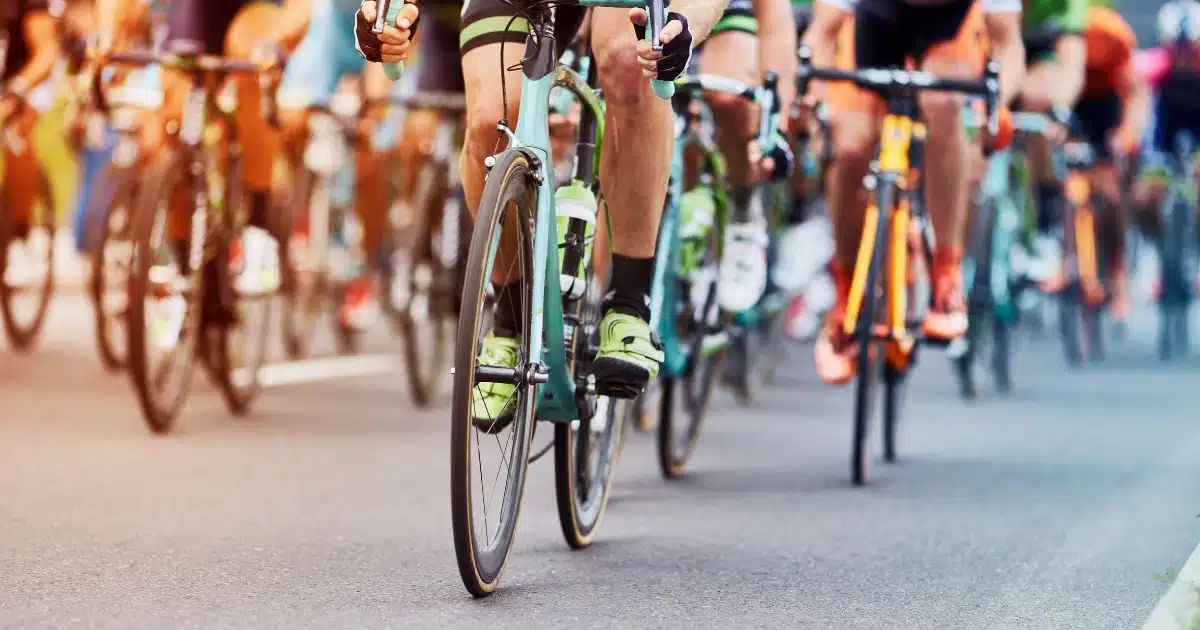



Nailing your ironman bike nutrition is crucial to your overall success in the Ironman. You may have heard the phrase, “ride for show, run for dough,” before, which is ultimately true. You won’t be winning any medals if you don’t come off that bike ready to rock the run. Even if your goal is not to win. Your overall experience and enjoyment of the event will be immensely improved by getting your Ironman bike nutrition spot on. As fun as it is to absolutely crush the bike, the name of the game here is setting yourself up for a powerful run too.
Why is it important to have a plan?
The bike leg of an Ironman makes up nearly 80% of the total miles completed in an Ironman. The bike is also usually completed at lower heart rates than both the swim and the run. For that matter, it is the best time to absorb more fuel and hydration. With that said, this is not the time to rely on intuition on when and how much to eat and drink. It’s all about intentional fueling and hydrating.
Having a race nutrition outline will:
—Keep you on schedule
—Pass the time
—Help prevent GI issues caused by over- or under-fueling
—Ease stress
What is the best way to fuel the Ironman bike?
This is such a tricky question. If you were to ask a handful of your closest training buddies on what they use, you would most likely get a handful of different answers. The most important thing to remember is that whatever strategy you use, make sure you’ve trialed it well. Do what works for you AND the race environment.
Beyond getting an idea as to what you need to do to meet your requirements, you should also be thinking about the weather, the altitude, and the duration for which you expect to ride. In your training leading up to race day, consider trying several different products (liquid and solid), calculate your needs, and then practice as many times as you can in your training until you nail it down.
Here are a few Ironman bike nutrition guidelines to think about:
- A general aim for carbs (and calories) per hour is anywhere between 60 and 90g, or 240 and 360 calories. This is by no means a ceiling. If you are able to tolerate more, go for it! The science (PMC4008807) even says that these recommendations are independent of body size as well as training status. Physiologically, the goal is to figure out what you can personally handle.
- Pro tip! Consume carbs from multiple sources of sugar to allow higher oxidation rates (faster breakdown) and prevent the accumulation of carbohydrate in the intestine. An example would be to look for a product that has both dextrose and sucrose as opposed to just dextrose. There is evidence that you can absorb 30-40% more calories if your drink contains multiple types because a greater number of intestinal transporters can be utilized (PMC4042570/)
- The source of the carbohydrates can be liquid or solid fuel. I’m a huge fan of using hydration mixes in your bike bottles to help you get enough carbs and electrolytes in without adding a lot of extra weight in the fuel stored on your bike. And supplementing with other solid fuel sources.
- After consuming any concentrated sugar sports products, especially gels, it is a good idea to take a couple sips of water to not only dilute the gut but to enhance the breakdown of the product.

When to fuel during the Ironman bike?
If you take away one thing from this article, it’s this: fuel early and often.
You will want to start fueling within the first 15 min of the bike (if not already in T1) since you will be calorie depleted from the swim. From there on, setting a timer on your watch to beep at you every 10-15 minutes. This is a useful strategy to use to keep you on track with your fueling and hydration. Once you get behind, it’s really hard to get caught back up and could put you at risk for possible GI issues.
On a final note, we highly recommend keeping your bike pace in check. By going out too hard at the start and getting your heart rate too high, this will potentially cause your gut to shut down and will halt fuel and fluid from being absorbed. When this happens is can cause big-time GI problems and it will make it really challenging to execute your nutrition plan. Even if you do come out of it—it’s really hard to catch back up. So stay within your limits throughout the race to ensure you can continue staying well fueled and hydrated.
Ironman Bike Nutrition: How should I hydrate?
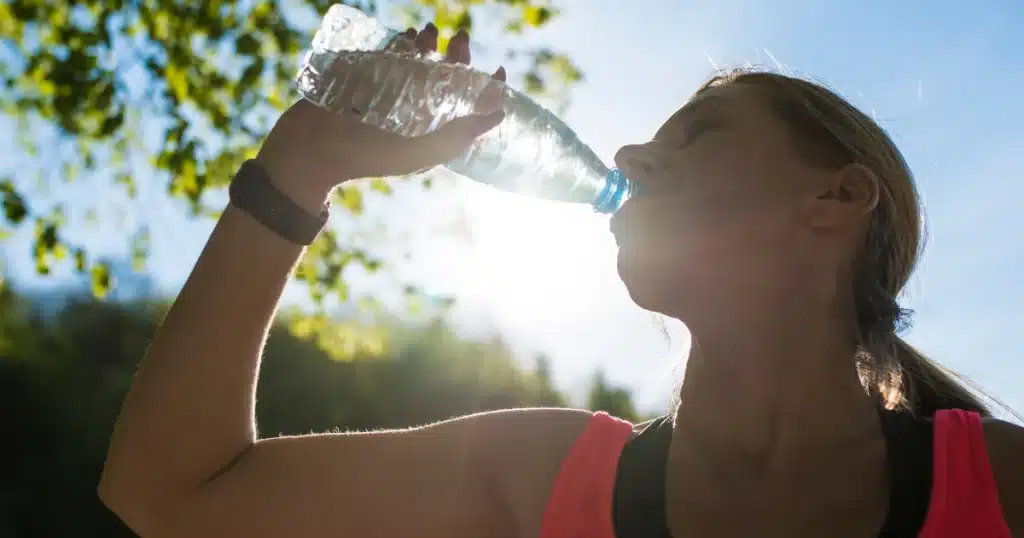
To ensure you’re absorbing carbs and electrolytes, and preventing dehydration, you need to consume the right amount of fluids. The volume you need to drink is determined by your sweat rate (which is relative to weather conditions, elevation and the intensity of your race). But, also the amount of calories and electrolytes you are consuming. This becomes a dance of consuming too much which can leave your stomach sloshy and too little which will leave you feeling bloated.
A few key points to consider:
- Generally, consuming 100 calories or 25 grams carbs per 8 ounces of fluid is a decent place to start. Including carbs with your hydration can actually enhance fluid absorption and retention.
- Most athletes can comfortably consume 24-32 ounces of fluid per hour (or 4-8 ounces of fluid every 15-20 minutes).
- The key here is to split that fluid up over the course of the hour and drink often (like every ~15 min during the hour).
- You should have to pee during the race. This is a good indication that you are hydrated. We like to see our athletes have the urge to pee every 2 to 2.5 hours on the bike. (Pssst. Bottle exchange works great for rinsing off your shorts if you choose to “go” as you’re riding.)
- Electrolyte concentrations vary widely from athlete to athlete. We often will look primarily at sodium intake as that’s the main electrolyte lost through sweat. Generally, the recommendations begin anywhere from 600 mg of sodium per hour and go all the way up to as high as 2,000 mg sodium per hour. To dial these numbers in accurately, we do highly recommend sweat testing. If you will not be doing any kind of sweat testing then a decent starting point with sodium intake would be between 500-1000 mg/hr.
How do Ironman aid stations work?
Along the course, there will be aid stations offering fuel and hydration. Halfway through the course, you will also be able to stop at “special needs” to gather items you have packed to replenish your own personal items. While aid stations during the bike are oftentimes every 15 miles, you will want to be sure to check the Ironman website and athlete guide to know when and where they are.
Ironman races usually have the following products available during the race:
—Gatorade Endurance (1 serving per 12 ounces—22g carb, 300mg sodium)
—Bars, Quantum Energy Squares (210 calories, 20g carb, 11g fat, 270mg sodium)
—Gel – Maurten GEL 100 and GEL 100 CAF 100 (25g carb, 85mg sodium)
—Water
—Fruit
—Red Bull (27g carb, 100mg sodium)
How to carry nutrition on the bike for an Ironman?
Once you’ve dialed in you how much nutrition you need per hour, you then need to figure out how you are going to carry it!
Here are some easy ways to optimize storage on your bike and racing kit:
- Usually, bikes have the ability to carry four bottles. There should be two cages in the downtube and two behind the seat. You may also have the option for more storage between the aero bars or a hydration system built into the frame.
- You can attach bike storage options to the top tube or behind the seat
- Your race kit should have storage options as well. There are almost always pockets in the back but oftentimes there are pockets alongside the shorts or inside near the chest too.
During the race, there is a special needs storage station at the halfway point of the bike. This is where you can completely replenish your fuel storage. The big draw to this is that you would only need to carry half of your bike nutrition. The drawback is that you could lose quite a bit of time locating your bag and repacking your bike.
Lastly, you can use on-course bike nutrition as well. With that said, you will need to be 100% sure that any product offered will work for you and that you don’t miss an aid station. Practice with a friend in grabbing fuel products and bottles as you ride by them. This is a key skill to have as the bottle exchange/aid stations are congested with riders and can easily lead to bike crashes.
If you’re in need of Ironman nutrition strategy support
You don’t have to figure out all thing stuff alone. Triathlon nutrition is our jam!
The Alex Larson Nutrition dietitian team has two dietitians who’ve done an Ironman, both Alex and Hanna. Having that first-hand experience is what makes our nutrition coaching exceptional, because we get it. We’ve been there. We understand what goes into prepping your Ironman race day nutrition.
We would love to be that sounding board and support system for you as you navigate the journey to your biggest athletic goals! Check out our 1:1 nutrition coaching services and work with an expert to streamline your triathlon fueling.

Alex
I provide nutrition coaching for endurance athletes to improve performance and body composition through a simple and flexible eating style.
Hi, I'm
LEARN MORE →


the
carb culture
shop
This collection of athlete-inspired apparel is basically a love letter to endurance athletes who celebrate carbs.
For too long, diet culture pushed the idea that carbs were something to fear. But, we are now in a carb-culture era where endurance athletes are reclaiming their fuel, honoring their bodies and celebrating the foods that actually help us perform.
That is what this collection represents. It's more than apparel. It's a movement. A community of athletes who are not afraid to fuel well, eat enough and take up space.
designed for the carb-loving athlete
take the quiz!
Let's discover your Endurance Nutrition IQ
How well do you know your fueling? Answer these questions and let's see where your endurance nutrition knowledge is at!
Take the quiz
level up your nutrition game with these freebies
free downloadS
Protein-Packed 10-Day Sample Meal Plan
Athlete Eating Guide
Athlete Grocery Shopping Guide


1
2
3
Inspiration to fit 120 grams of protein into your day
Planning what goes on your plate
Putting the right foods in your grocery cart