ENDURANCE EATS
Your go-to safe space to learn about all things nutrition and endurance performance.
Fueling Female Athletes: Cycle Syncing and Metabolism
July 30, 2025
listen on YouTube
listen on spotify
listen on apple podcasts



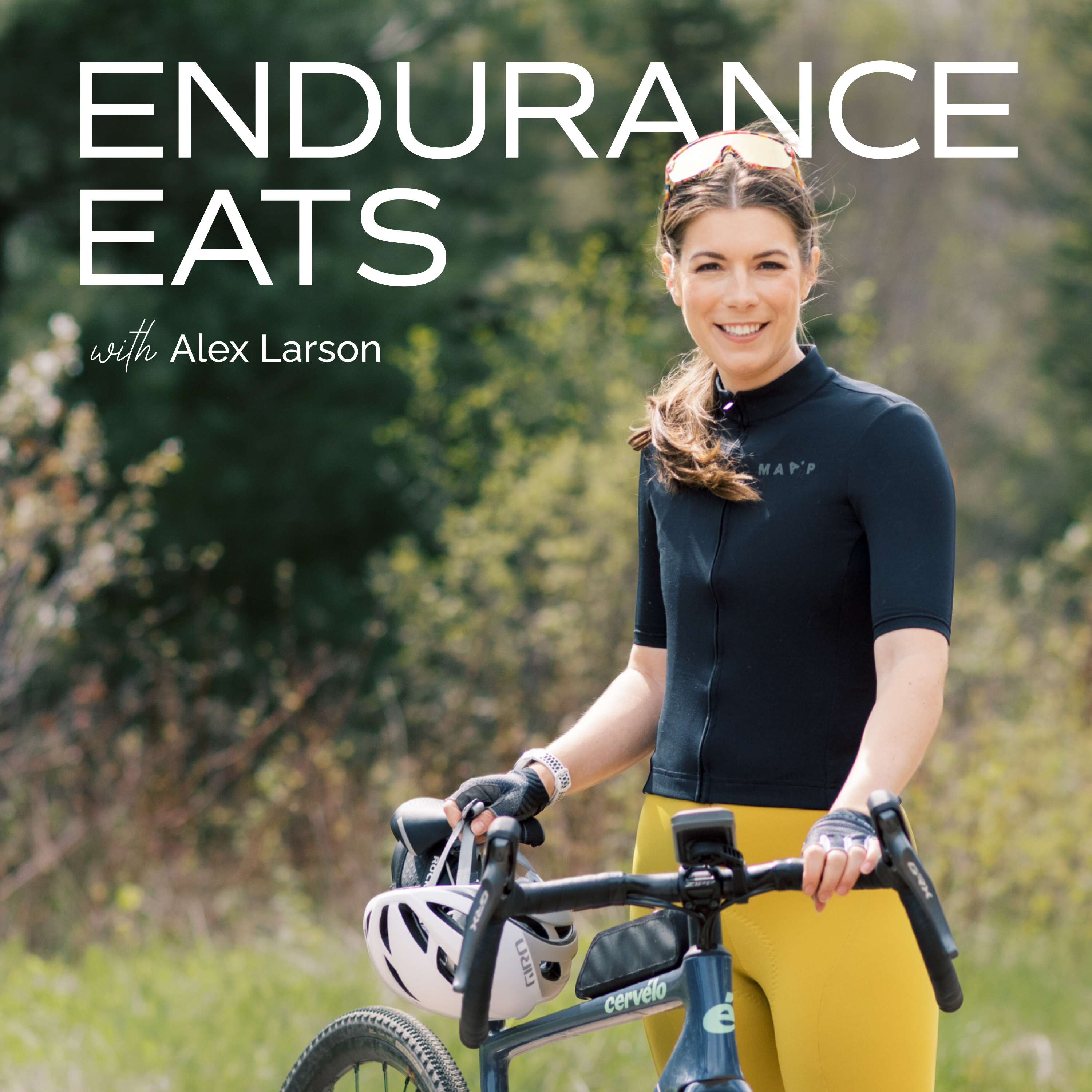
Welcome to the Endurance Eats podcast! This is your go-to safe space to learn about all things nutrition and endurance performance. Get ready for a journey packed with science-backed strategies, practical tips, and inspiring guests to revolutionize the way you think about fueling your body. Whether you’re a seasoned triathlete, a newbie runner, or a veteran cyclist, this podcast is for you.
In this enlightening episode, join Alex Larson and Dr. Abbie Smith-Ryan as they delve into the intricacies of exercise and nutrition tailored for women's health. Discover how to optimize body composition, metabolism, and cardiovascular health through sustainable practices. Learn about the impact of menstrual cycles on nutrition, the importance of muscle quality, and the role of nutrient timing. Whether you're an athlete or simply looking to enhance your well-being, this episode offers valuable insights and practical advice to empower your health journey. Tune in for a conversation that blends science with everyday application, ensuring you can thrive at every stage of life.
Guest Bio:
Dr. Abbie Smith-Ryan is a leading voice in exercise physiology and sports nutrition, known for her passion for empowering women and advancing evidence-based health strategies. She serves as the Associate Chair for Research in the Department of Exercise and Sport Science at the University of North Carolina Chapel Hill, where she also directs the Applied Physiology Laboratory and co-directs the Human Performance Center.
With a PhD from the University of Oklahoma and over 180 peer-reviewed publications to her name, Dr. Smith-Ryan’s research focuses on exercise and nutrition interventions that improve body composition, cardiovascular health, and metabolic function—especially in women’s health, perimenopause, post-menopause, and overweight and obese populations.
She has led projects funded by the NIH as well as national and international clinical trials, and she’s been recognized with numerous honors, including Nutrition Researcher of the Year, Young Investigator of the Year, and Outstanding Sports Scientist of the Year by the National Strength and Conditioning Association.
Dr. Smith-Ryan is also an active member of organizations such as the American College of Sports Medicine, the American Diabetes Association, and the International Society of Sports Nutrition. A devoted mentor and educator, she’s passionate about translating lab-based research into practical strategies that improve real lives.
Resources Mentioned in This Episode:
Connect with Me:
Instagram: @alexlarsonnutrition
Website: alexlarsonnutrition.com
Don’t Forget to Subscribe!
Click that follow button to stay updated on future episodes packed with actionable insights and expert advice for endurance athletes.
Have Questions or Suggestions?
Send me a message, and I might cover it in a future episode!
In this episode of the Endurance Eats Podcast, I sat down with Dr. Abbie Smith-Ryan, a researcher and professor at the University of North Carolina at Chapel Hill whose work focuses on exercise and nutrition to optimize body composition, metabolism, and cardiovascular health in women. We covered a lot of ground in this one for my female athlete friends. From the menstrual cycle and performance to metabolic adaptation, yo-yo dieting, and why eating more is often the answer to the question nobody expects.

Does Your Menstrual Cycle Affect Athletic Performance?
This is one of the most common questions I get from female athletes, and Dr. Abbie’s answer is refreshingly grounded. Her bottom line: most women just need to focus on eating well first, and cycle-specific adjustments are the high-hanging fruit.
That said, there are meaningful patterns worth knowing about. Research shows that female athletes can perform regardless of the phase of their cycle, which is an important reassurance for anyone worried about timing races or hard workouts.
However, some differences do show up, particularly in the luteal phase, which is the stretch after ovulation and before your period begins.
In the luteal phase, you may notice:
- Slightly higher energy expenditure, meaning you may genuinely need more calories
- Increased hunger that has a real physiological basis, not just a lack of willpower
- More soreness and a greater benefit from optimizing nutrient timing around hard efforts
- GI disturbances that may make certain foods harder to tolerate
The practical takeaway is to lean into that extra hunger during the luteal phase rather than fight it. Getting ahead of your calorie needs in that window can prevent the overeat and restriction cycle that many women describe around their period.
Muscle Quality: Why It Matters More Than You Think
Dr. Abbie’s research has explored muscle quality, which refers to the amount of fat and connective tissue within the muscle itself. Higher quality muscle means less fat infiltration and better metabolic function.
A few things that can lower muscle quality over time:
- Aging, which naturally increases fat infiltration in muscle tissue
- Inadequate strength training, especially for endurance athletes who focus mostly on cardio
- Metabolic conditions like prediabetes or elevated blood lipids
One study from her lab looked at stress fracture incidence in Division I runners and found that bone density was not the differentiating factor. Instead, athletes who had experienced stress fractures tended to have lower muscle quality. The takeaway for endurance athletes is clear: strength training is not optional. It protects your muscle quality, which in turn protects your bones.
Currently, muscle quality is most accurately assessed through MRI, CT scan, or ultrasound in a clinical or research setting. However, if you have metabolic markers trending in the wrong direction, such as elevated blood sugar, insulin resistance, or high lipids, that can be an indirect signal that muscle quality may also be lower than optimal.
Metabolic Adaptation: Why Eating Less Is Making Things Worse
This section of the conversation is one that I wish every endurance athlete, especially female athletes, could hear.
Dr. Abbie explained that exercise makes your mitochondria more efficient, which is fantastic for performance. But when you combine that efficiency with chronic calorie restriction or yo-yo dieting, your body becomes extremely good at doing more with less. The result is a metabolism that has downshifted to match your reduced intake and will defend that state.
She described this as a metabolic adaptation, and it is a real, documented phenomenon that she has researched specifically in athlete populations.
Signs your metabolism may have adapted to restriction:
- You are eating very little but not losing weight, or are continuing to gain weight gradually
- Your energy intake is well below your estimated needs, but your weight is stable
- You have a long history of cycling between periods of restriction and periods of normal eating
- You feel like you can perform on less food than makes sense for your training volume
The counterintuitive solution is a slow, deliberate increase in calories, sometimes called a reverse diet. Dr. Abbie emphasized that this is not a quick fix. In populations with a significant history of restriction, it can take a year or more for metabolism to normalize. But the research is consistent: restricting further does not work and often makes things worse over time.
The Carb-to-Protein Ratio for Body Recomposition
If you have tried to balance body composition goals with endurance training demands, you know it can feel like an impossible puzzle. Dr. Abbie shared a practical framework that I think is one of the most useful things for endurance athletes to understand.
The classic post-workout recommendation is a 4:1 carb-to-protein ratio, which is what you get in chocolate milk, roughly 40 grams of carbohydrate to 10 grams of protein. That ratio is well supported for glycogen replenishment after endurance exercise.
However, if body recomposition is a goal alongside performance, a lower carb-to-protein ratio appears to provide a meaningful advantage. For women specifically, research points to approximately a 1.5:1 ratio, so around 15 to 20 grams of carbohydrate paired with 10 grams of protein.
This does not mean cutting carbs. It means being more intentional about pairing protein with your carbohydrate sources. As Dr. Abbie put it, if you have 50 grams of carbohydrate from pasta, make sure you are also getting around 25 grams of protein alongside it. This approach supports satiety, recovery, and body composition without restricting the carbohydrates you need to fuel your training.
Front-Loading Nutrition Earlier in the Day
One pattern my team sees consistently with female athletes who come in struggling with body composition is that the majority of their calories are concentrated in the evening, often after a day of skipping meals or eating very little due to busy schedules.
Dr. Abbie validated this completely. Eating earlier in the day helps regulate hunger hormones, gives your body fuel when it actually needs it, supports better energy throughout the day, and over time contributes to improved body composition. She also noted there is a neurological component: willpower and cognitive resources are higher earlier in the day, which makes prioritizing nutrition at breakfast and lunch a more sustainable behavior.
The shift she described is simple in concept but takes real practice for athletes whose jobs or family demands pull them away from eating during the day: treat your daytime meals with the same priority as your training.
Why Intermittent Fasting Is Not a Great Fit for Endurance Athletes
Dr. Abbie did not mince words here. The research increasingly points to fewer meals and more restrictions as one of the primary drivers of a slower metabolism, not aging itself.
Intermittent fasting, while popular and potentially useful in some contexts, runs counter to what endurance athletes typically need, especially those with body composition or performance goals.
Exercise already blunts appetite in the short term and then amplifies it later. Layer extended fasting on top of that, and you end up in a cycle of under-fueling followed by overeating, with a metabolism that is adapting downward the whole time.
Her recommendation aligns closely with what my team practices with female athletes: eat more frequently, eat earlier in the day, and focus on what you are eating rather than when you are not eating.
Key Takeaways
- You can perform regardless of your menstrual cycle phase, but the luteal phase may come with increased energy needs and soreness worth addressing through nutrition
- Muscle quality matters for both metabolic health and injury prevention, and strength training is the primary tool to protect it
- A long history of yo-yo dieting or restriction can significantly impair metabolism, and the solution is a slow, intentional increase in calories, not further restriction
- A lower carb-to-protein ratio, around 1.5:1 for women, may support body recomposition goals without sacrificing the carbohydrates needed for performance
- Front-loading nutrition earlier in the day supports energy, hunger hormones, and body composition over time
- Intermittent fasting generally works against the endurance athlete’s goals
If you found this post helpful, please share it with a fellow endurance enthusiast, and don’t forget to check out the full podcast episode for even more depth and nuance!

Alex
I provide nutrition coaching for endurance athletes to improve performance and body composition through a simple and flexible eating style.
Hi, I'm
LEARN MORE →
Top Episodes
Fueling Female Athletes: Cycle Syncing and Metabolism
Fueling Female Athletes: Cycle Syncing and Metabolism
Fueling Female Athletes: Cycle Syncing and Metabolism
Fueling Female Athletes: Cycle Syncing and Metabolism
Fueling Female Athletes: Cycle Syncing and Metabolism


