ENDURANCE EATS
Your go-to safe space to learn about all things nutrition and endurance performance.
Perimenopause and Performance: Fueling Women Over 40
August 6, 2025
listen on YouTube
listen on spotify
listen on apple podcasts



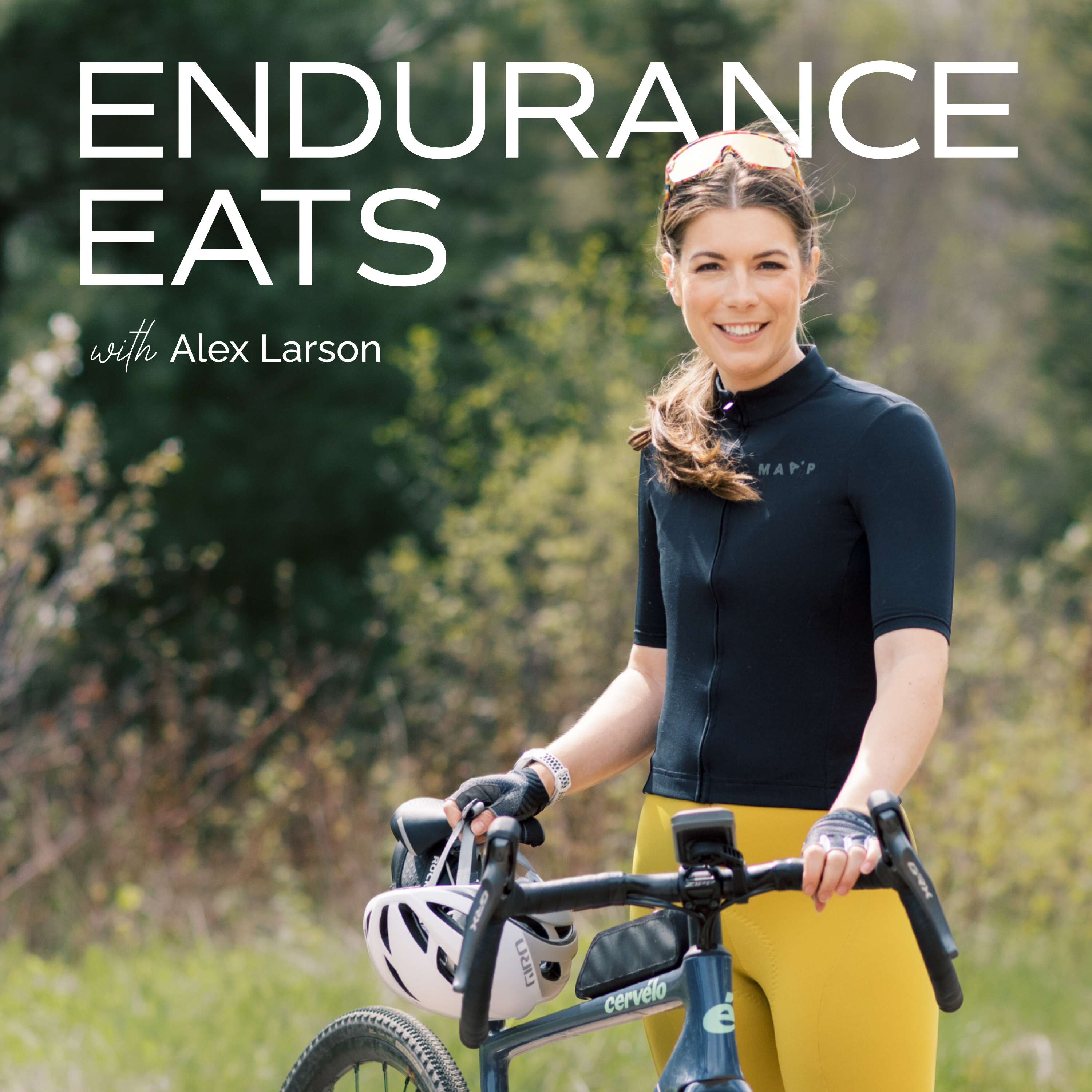
Welcome to the Endurance Eats podcast! This is your go-to safe space to learn about all things nutrition and endurance performance. Get ready for a journey packed with science-backed strategies, practical tips, and inspiring guests to revolutionize the way you think about fueling your body. Whether you’re a seasoned triathlete, a newbie runner, or a veteran cyclist, this podcast is for you.
In this insightful episode, Alex Larson and Dr. Abbie Smith-Ryan explore the unique challenges and opportunities that perimenopause and menopause present for women's health. They discuss how exercise and nutrition can be tailored to support women through these life stages, focusing on maintaining health and vitality.
Guest Bio:
Dr. Abbie Smith-Ryan is a leading voice in exercise physiology and sports nutrition, known for her passion for empowering women and advancing evidence-based health strategies. She serves as the Associate Chair for Research in the Department of Exercise and Sport Science at the University of North Carolina Chapel Hill, where she also directs the Applied Physiology Laboratory and co-directs the Human Performance Center.
With a PhD from the University of Oklahoma and over 180 peer-reviewed publications to her name, Dr. Smith-Ryan’s research focuses on exercise and nutrition interventions that improve body composition, cardiovascular health, and metabolic function—especially in women’s health, perimenopause, post-menopause, and overweight and obese populations.
She has led projects funded by the NIH as well as national and international clinical trials, and she’s been recognized with numerous honors, including Nutrition Researcher of the Year, Young Investigator of the Year, and Outstanding Sports Scientist of the Year by the National Strength and Conditioning Association.
Dr. Smith-Ryan is also an active member of organizations such as the American College of Sports Medicine, the American Diabetes Association, and the International Society of Sports Nutrition. A devoted mentor and educator, she’s passionate about translating lab-based research into practical strategies that improve real lives.
Resources Mentioned in This Episode:
Connect with Me:
Instagram: @alexlarsonnutrition
Website: alexlarsonnutrition.com
Don’t Forget to Subscribe!
Click that follow button to stay updated on future episodes packed with actionable insights and expert advice for endurance athletes.
Have Questions or Suggestions?
Send me a message, and I might cover it in a future episode!
This episode is brought to you by Salt Stick! Have fast acting electrolytes for your next workout!
In Part II of my conversation with Dr. Abbie Smith-Ryan, we shift from metabolism and muscle quality to one of the most requested topics from our community: perimenopause. What does fueling women over 40 look like? What is actually happening in your body during this life stage? How does it affect performance and body composition, and what can you actually do about it?
Dr. Abbie brings both her research expertise and her own experience as an endurance athlete to this conversation, and I think it will feel like a huge exhale for a lot of women who have been quietly wondering why things feel different.
If you missed Part I, I recommend starting there. We covered metabolic adaptation, the carb-to-protein ratio for body recomposition, and why eating more is often the missing piece. You can find that episode here.

What Is Perimenopause, Exactly?
One of the most surprising things Dr. Abbie shared is that the average onset of perimenopause in the US is around age 41, and many women start experiencing symptoms even earlier. If you are in your late 30s and noticing changes in sleep, mood, energy, or recovery, it is worth knowing that these can be early signs.
Here is a quick breakdown of the three phases:
Perimenopause is marked by intermittent periods and a range of symptoms, including hot flashes, brain fog, increased anxiety and depression, and bone and joint pain. Late perimenopause is generally characterized by not having a period for more than three months at a time.
Menopause is a single point in time, defined as 12 consecutive months without a period. The average onset in the US is around age 52.
Postmenopause is everything after that point. Most women actually spend the majority of their adult lives in postmenopause. And while perimenopause can feel chaotic, Dr. Abbie was clear that things tend to stabilize once you move into postmenopause, and many women genuinely feel better.
One practical note: ask your mom when she went through perimenopause if you can, because there does appear to be a genetic component to timing.
Why Your 40s and 50s Can Feel So Frustrating for Women
Dr. Abbie made a point I want to highlight right away. Before we get into what is changing, she emphasized that endurance exercise is one of the most powerful tools women have during this life stage, not just for body composition, but for mental health. Anxiety, depression, and sleep challenges are common in perimenopause, and endurance exercise directly supports all three. Cholesterol tends to rise, and cardiovascular disease risk increases during this phase, and again, endurance exercise helps.
The message is not to abandon running or cycling in favor of only lifting weights. It is to be strategic about all of it.
That said, real physiological changes are happening. Soft tissue injury risk increases due to musculoskeletal shifts, which means high volume and high intensity all the time is not always the answer. Muscle quality, which we covered in Part I, does appear to decline in late perimenopause compared to early perimenopause. And there may be a shift in how women oxidize fuel, with some early data suggesting less fat burning and more carbohydrate use than expected during moderate intensity exercise.
Does Your Metabolism Actually Slow Down in Perimenopause?
Dr. Abbie was careful here, and I appreciated her nuance. She is not convinced that perimenopause itself causes a significant metabolic slowdown. What she does see is that women in this life stage often default to eating less and exercising more in response to body composition changes, and that response tends to make things worse, not better.
What her preliminary data is showing is that fasting and low caloric intake may have a larger negative impact on metabolism in this life stage than at other times. So the classic approach of cutting calories is likely working against you.
Her recommendation is to do things that create a little metabolic inefficiency rather than leaning further into what your body has already adapted to.
Practically, this means:
Adding high-intensity interval training rather than only zone two or steady state work. Trying activities your body is not accustomed to, like rowing, swimming, or a different mode of cardio. Adjusting the carb-to-protein ratio of your meals rather than cutting overall calories.
Fueling Women Over 40: How to Eat Differently in Perimenopause
When I asked Dr. Abbie what women actually need to change about their diet during this phase, her answer was more practical than dramatic. You do not need a complete overhaul. You need to be more intentional about a few key things.
Increase fruits, vegetables, and fiber. Cholesterol rises in perimenopause, and whole grains, fruits, and vegetables have a measurable impact. Most of us should be eating more of these anyway, but during this life stage, the benefit is amplified.
Prioritize protein. There is early evidence that anabolic resistance, meaning the muscle’s reduced ability to utilize amino acids, may begin earlier in perimenopausal women than previously thought. Getting adequate protein consistently is important for maintaining muscle quality. One note from my own clinical experience: when athletes start eating more protein, their fat intake often rises quickly too, particularly from sources like nut butters. Leaning toward leaner protein sources helps keep overall calories in check.
Do not forget essential fats. Omega-3s and Omega-6s often get overlooked in the perimenopause conversation, but the brain changes during this phase make them especially relevant. Prioritizing high-quality fats from sources like salmon, walnuts, chia seeds, and flaxseed is worth the effort.
Eat earlier in the day. We covered this in Part I, but it came up again here. Front-loading your nutrition, especially breakfast, supports better energy, hunger hormone regulation, and body composition over time. Dr. Abbie noted that even small things like having a real breakfast consistently will make a bigger impact during this life stage than at other times.
What About Protein Before a Workout?
This is where things get interesting for endurance athletes specifically. Standard sports nutrition advice puts carbohydrates first before a workout, and for good reason. But Dr. Abbie pointed out that for women in perimenopause who have body composition or metabolic goals, adding a small amount of protein before exercise can support fat oxidation and help with soreness.
The keyword is small. We are talking 10-15 grams, not a full meal. Think half a cup of Fairlife milk, a small yogurt pouch, a few ounces of a protein shake, or even essential amino acids stirred into your pre-workout carbohydrate drink. The goal is not to replace your carbs but to pair a little protein alongside them, especially for morning training sessions.
If GI issues are a concern, and they are for many runners, liquid or fast-absorbing formats work best. If even that feels like too much, the priority shifts to making sure you have carbs and protein together in the first window after your workout.
Does Hormone Replacement Therapy Help with Body Composition?
This was a question submitted by one of our own physician clients, and it is one of the most common things women in this stage want to know. Dr. Abbie’s answer was honest and nuanced.
The short version is that hormone therapy is most supported for symptom management, things like hot flashes, brain fog, and joint pain. There is no strong evidence that it directly drives muscle building or fat loss. What it may do indirectly is help women feel more like themselves, sleep better, have more energy, and therefore train and eat better. That indirect effect is real and worth considering.
Testosterone is also worth noting. It tends to drop in perimenopause, and endurance athletes who are also under-fueling may see an even steeper decline. That is a compounding factor worth discussing with your healthcare provider.
As Dr. Abbie put it, more research is still needed, but the indirect benefits of symptom relief should not be underestimated.
The Low-Hanging Fruit for Midlife Female Endurance Athletes
I asked Dr. Abbie for her top practical recommendations for fueling women over 40, and here is what she said:
Sleep. It is the first thing to go during perimenopause and one of the most important things to protect. If you are not prioritizing sleep, everything else is harder.
Eat breakfast and fuel yourself earlier in the day. This came up again for the second time in our two conversations. It’s that important.
Include resistance training. It does not have to be extremely heavy, but some form of weight training alongside your endurance work is essential for muscle quality, bone health, and metabolism.
Prioritize omega-3s, vitamin D, and magnesium. These three micronutrients have meaningful research behind them for this life stage, particularly vitamin D for bone and muscle, and magnesium for sleep and absorption challenges that may increase with age. All three can be supported through diet and supplementation.
Eat whole, balanced meals. Fresh or frozen fruits and vegetables, lean protein, and high-quality fats, eaten consistently, will have more impact than any single intervention.
What Stays True at Any Life Stage
One of my favorite moments in this conversation was when Dr. Abbie talked about building in grace. Consistency does not mean perfection. If you are making good choices most of the time and generally fueling well, you have more freedom than you think. The goal is to find a sustainable baseline, the habits you can still do on your toughest days, and build from there.
The other thing that stayed with me is her point about advocacy. Our healthcare system has not historically done a great job supporting women in perimenopause, particularly active women. If you are not feeling like yourself, Dr. Abbie encourages you to push for answers. There are things that help. You just may have to ask for them.
Key Takeaways
- Perimenopause can begin with symptoms as early as the late 30s, with an average onset around age 41 in the US
- Endurance exercise remains one of the most powerful tools for mental health, cardiovascular health, and overall well-being during this life stage
- Muscle quality does appear to decline in late perimenopause, which makes resistance training and adequate protein even more critical
- Cutting calories further is unlikely to help and may make metabolic adaptation worse
- Small amounts of protein before exercise, around 10 to 15 grams, may support fat oxidation and reduce soreness in perimenopausal women
- Hormone therapy is most supported for symptom management and may have an indirect positive effect on body composition by helping women feel well enough to train and eat consistently
- Priority micronutrients for this life stage are omega-3s, vitamin D, and magnesium
- Consistency over time beats perfection every time
My team and I are very experienced working with women in perimenopause. You can learn more about the 1:1 nutrition coaching program here. We are accepting new clients at this time.

Alex
I provide nutrition coaching for endurance athletes to improve performance and body composition through a simple and flexible eating style.
Hi, I'm
LEARN MORE →
Top Episodes
Perimenopause and Performance: Fueling Women Over 40
Perimenopause and Performance: Fueling Women Over 40
Perimenopause and Performance: Fueling Women Over 40
Perimenopause and Performance: Fueling Women Over 40
Perimenopause and Performance: Fueling Women Over 40


